Leadership Report
*Includes our flagship programs: McNulty Leadership Program,
The Lipman Family Prize, and the
Center for Leadership and Change Management
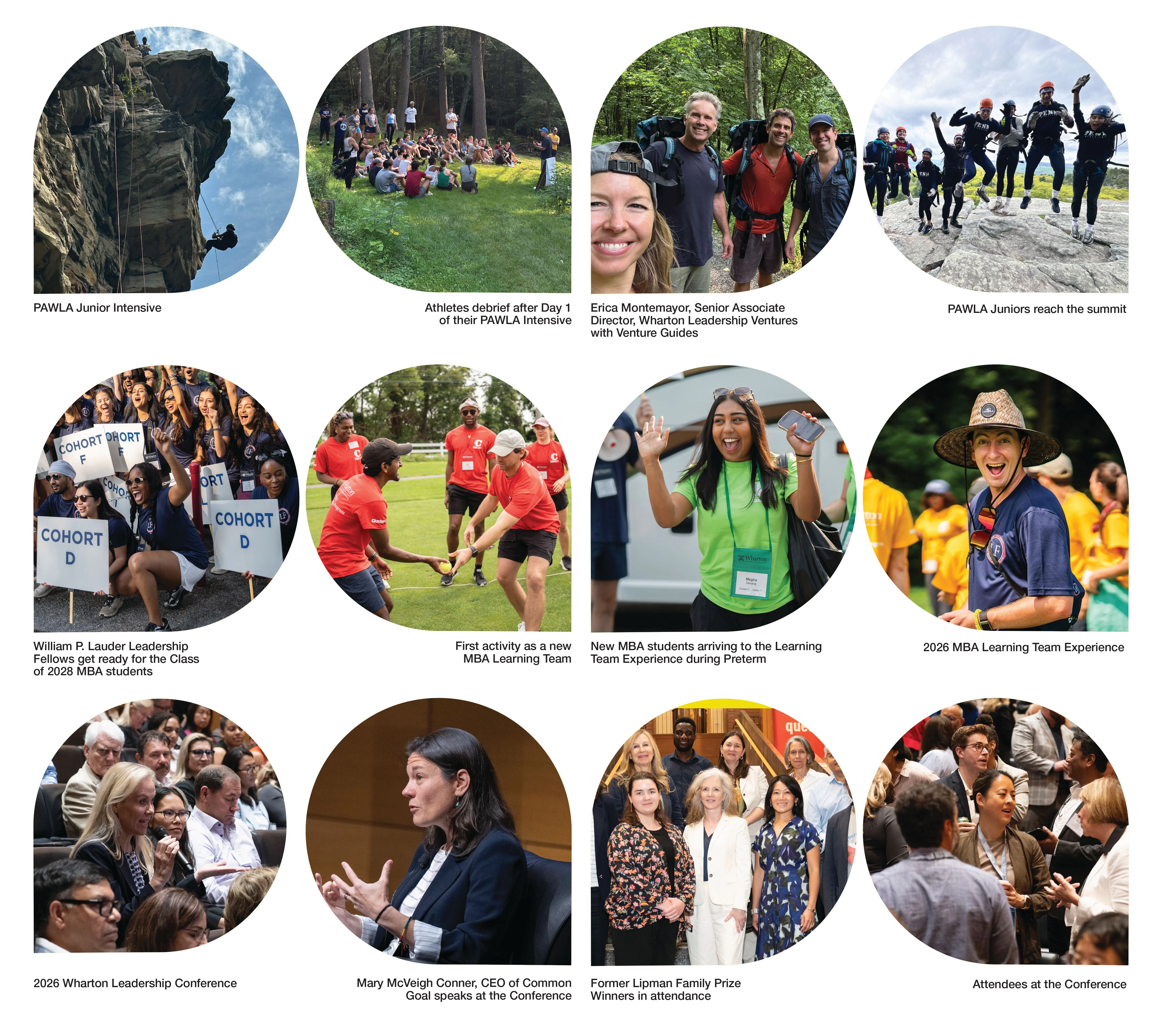
THE SUMMER IN PICTURES
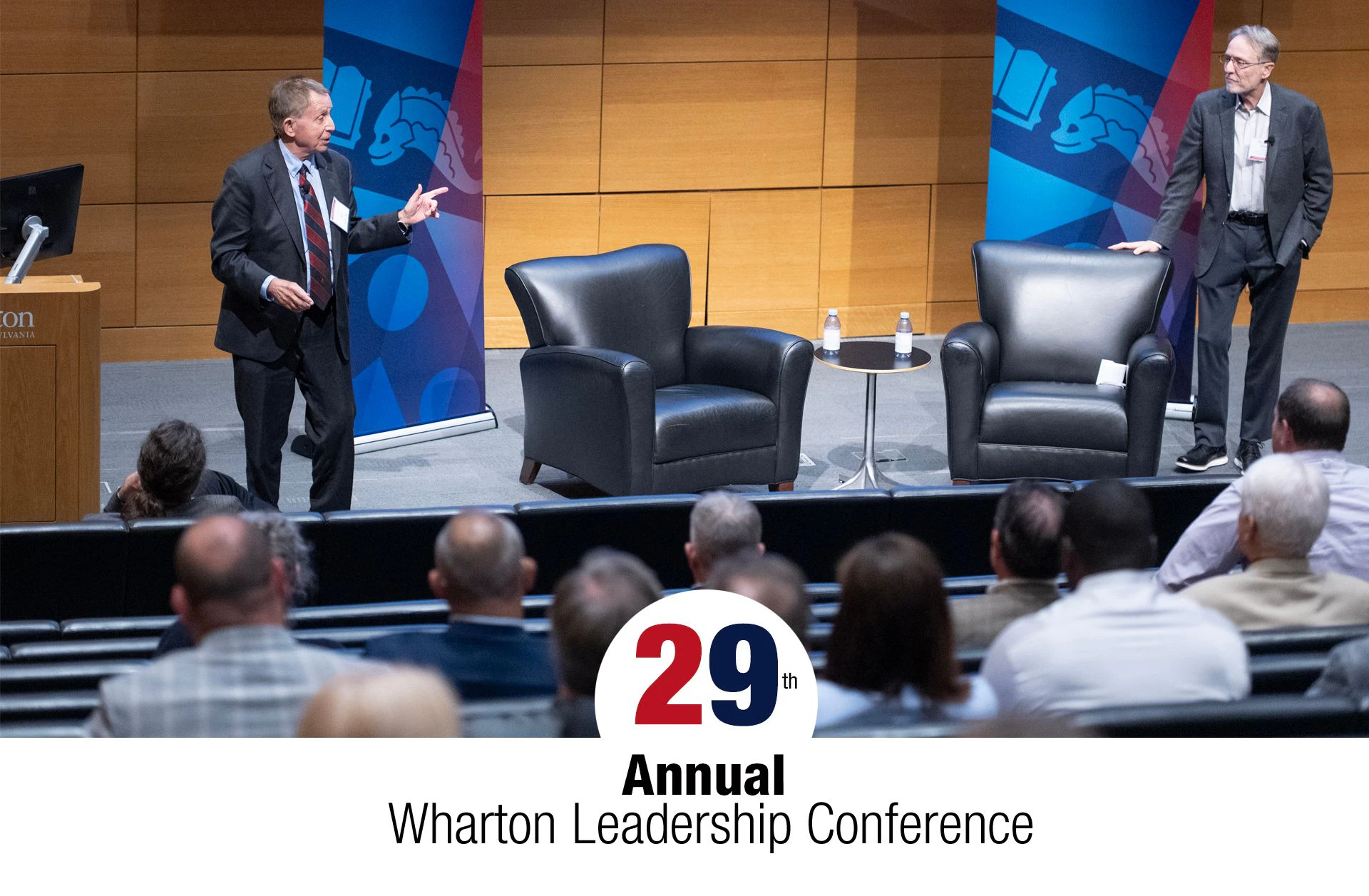
The 29th Annual Wharton Leadership Conference was held in June 2026 with the theme Leading in a Time of Tumult. At a time when political leadership is challenging foundational assumptions, the conference explored how leaders in business and other organizations are responding to a rapidly changing environment.
Co-hosted by the Center for Human Resources, the Center for Leadership and Change Management, and the McNulty Leadership Program, the conference brought together top executives, thought leaders, and Wharton faculty for a day of insightful conversation, discussion, and meaningful networking.
This year’s attendees included participants in the Wharton Executive Education Advanced Management Program, as well as members of the U.S. Marine Corps and Air Force. Attendees also included students from Arkema, Penn Medicine, and CHOP, alongside representatives from local police and fire departments. Members of the Lipman Family Prize Winner Community, members of our Executive Coaching Bench, and partners from the Golub Capital Board Fellows Program also spent the day networking and learning from our speakers.
2026 Speakers and Facilitators (in order of appearance):
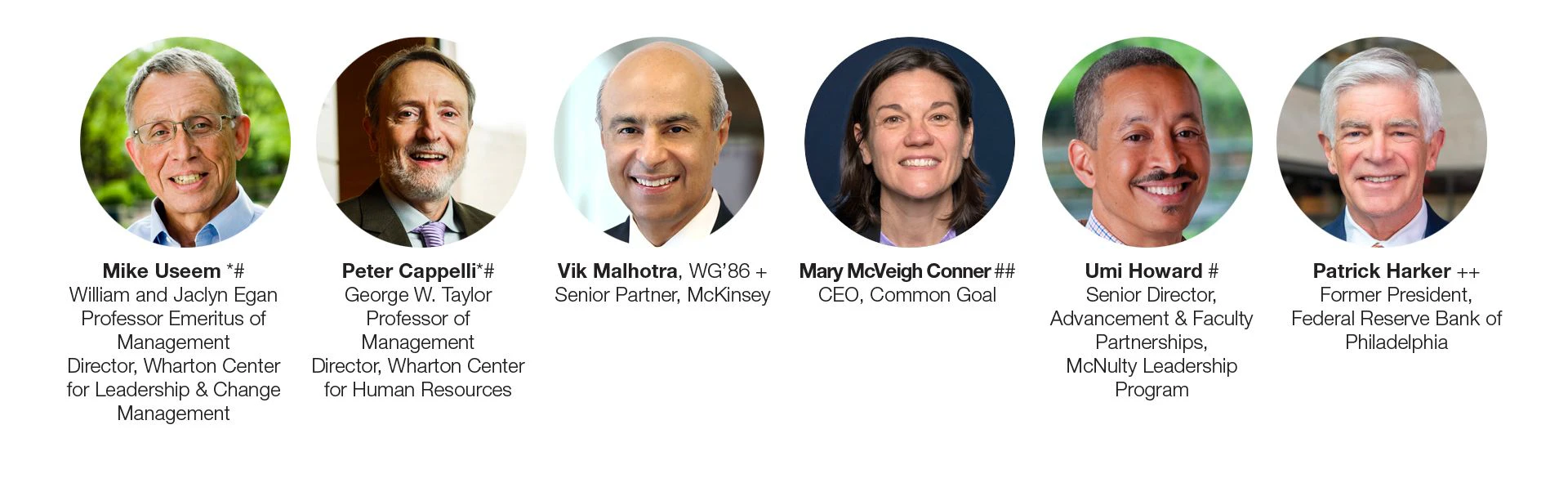
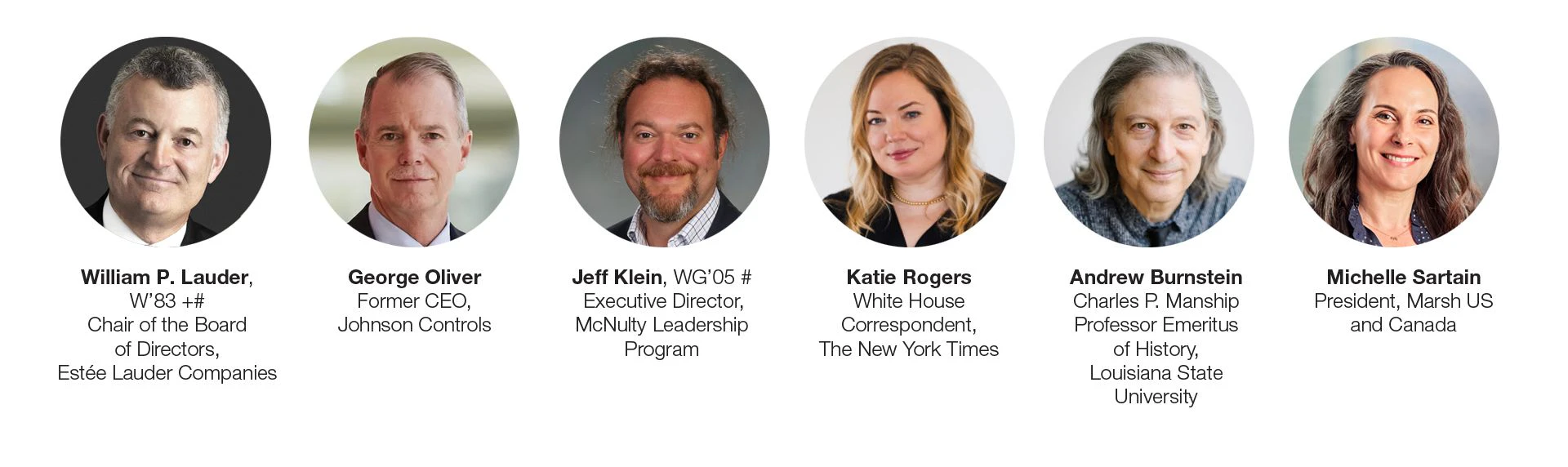
**Conference Director #Moderator +Leadership Advisory Board Member ++Former Wharton Dean
##Former Lipman Family Prize Grand Prize Winner
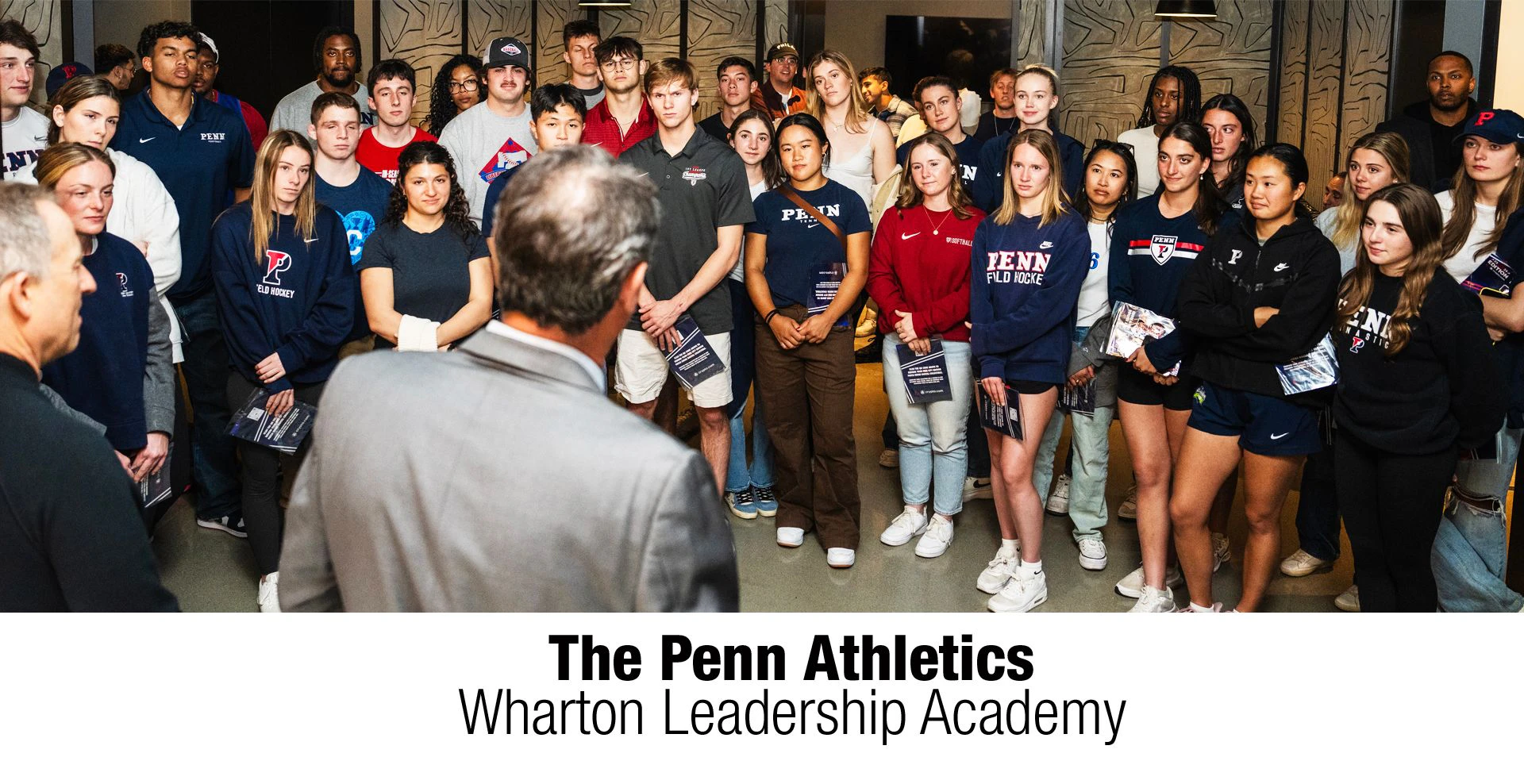
The Penn Athletics Wharton Leadership Academy (PAWLA) is a co-curricular partnership between Penn’s Division of Recreation and Intercollegiate Athletics (DRIA) and the McNulty Leadership Program. The specialized curriculum allows student-athletes to explore their leadership styles, as well as focus on character development, personal values, and effective communication. This innovative program was conceived by David S. Pottruck C’70, WG’72.
At the beginning of the summer, PAWLA juniors participated in a two-day Leadership Venture in upstate New York. This intensive experience fosters hands-on team-building, coaching, and leadership development designed for these athletes who are stepping into elevated roles on their teams.
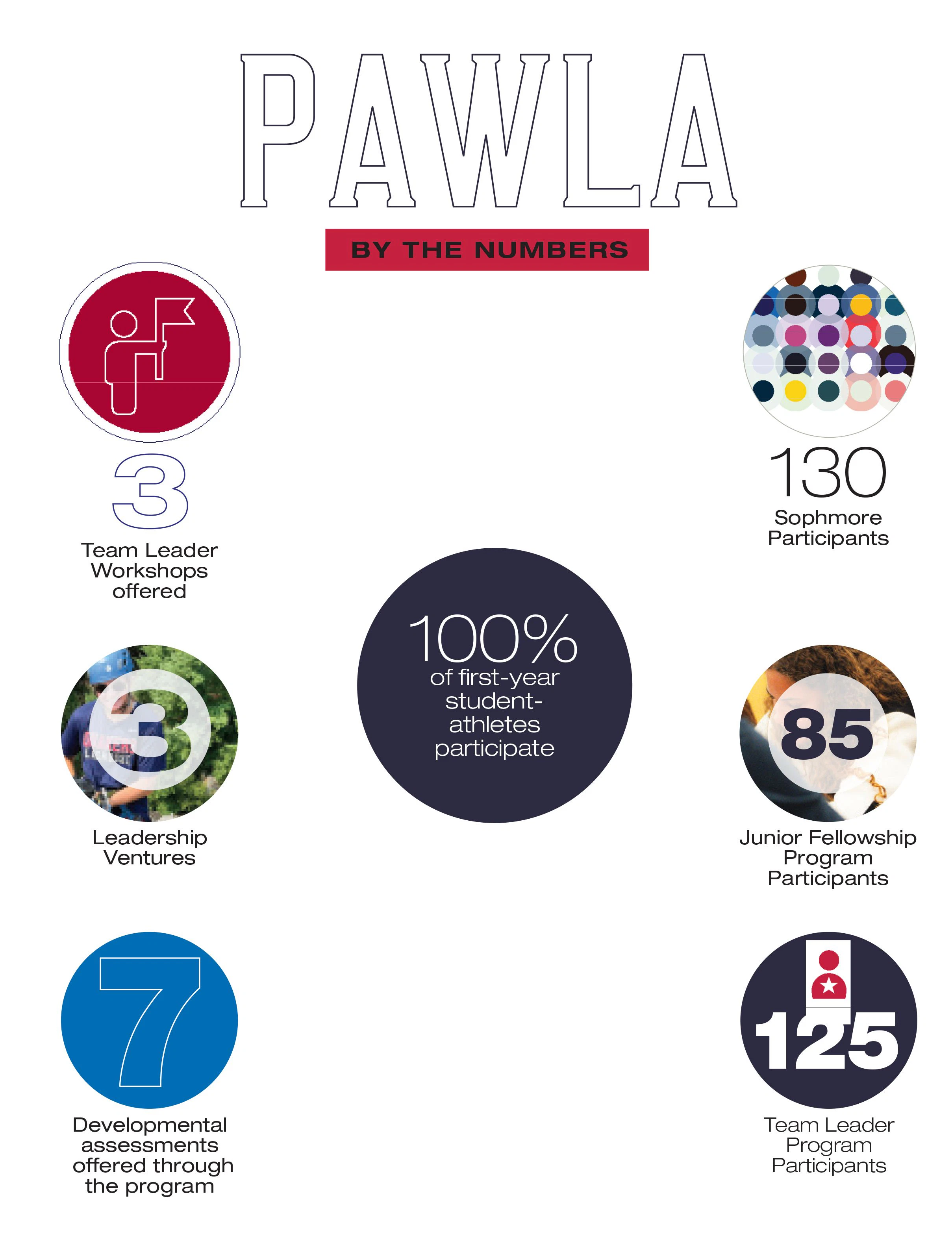
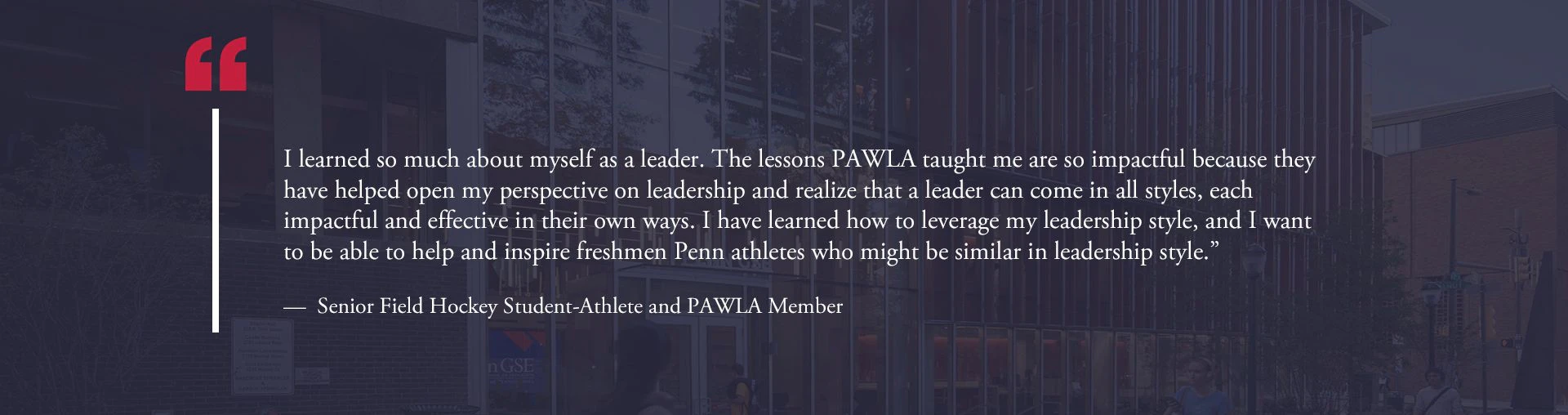
PAWLA provides leadership development for student-athletes, team leaders, and coaches across all four years of their academic careers.
First-year athletes participate in monthly workshops and experiential activities designed to bring leadership to the forefront of their college experience. Sessions are supported by group facilitators selected from the junior class of student-athletes. Students complete the Wharton Character Index (offered through People Lab), which establishes a baseline measurement in the competencies of grit, coachability, and generosity.
Throughout the year, students explore questions such as: How can I contribute? What goals do I have for myself? How can I do something better the next time around?
Sophomores participate in a year-long program focused on self-awareness and individual strengths. Through a variety of modules, student-athletes identify their behavioral styles and character strengths and conclude the year with a 360-degree peer review.
The program challenges students to examine their leadership styles, understand how their strengths show up on their teams, and recognize areas where they can continue to grow.
Throughout the year, juniors can also develop their facilitation and leadership skills and apply to serve as workshop facilitators. Selected facilitators receive additional training in peer coaching, group facilitation, and team building.
Rising juniors can opt into a two-day venture experience in upstate New York in late May that will prepare them for their new roles as leaders and team captains.
Two questions guide their development: How do I serve the needs of the group? How do I move from teammate to leader?
Senior team leaders participate in monthly structured small-group discussions with peers and coaches. They begin to assess their roles as team leaders and captains and work on their strengths and weaknesses so they can best contribute to the team's success.
The senior capstone project provides four-year PAWLA participants with an opportunity to continue their leadership development beyond their athletic teams while giving back to the Penn Athletics community. This project challenges student-athletes to examine what leadership looks like in the broader world and how they can most effectively engage with their communities. Students draw on what they have learned throughout PAWLA to navigate leadership challenges and test their own capabilities.
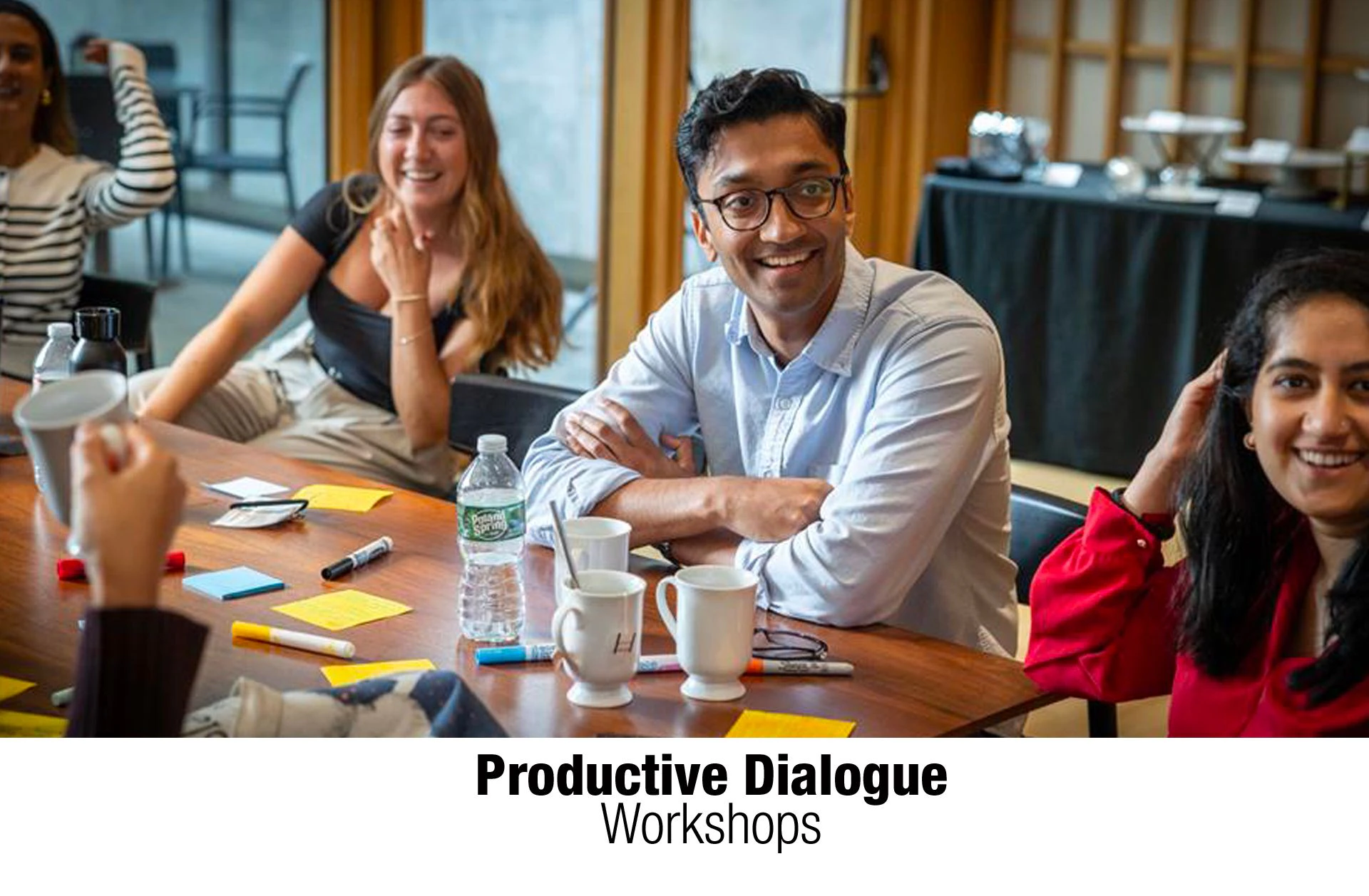
As workplaces and communities grapple with increasingly difficult conversations, the ability to navigate complex and opposing viewpoints has become an essential leadership skill. Against a backdrop of rapid technological change, economic uncertainty, political polarization, and increasingly complex global markets, leaders must engage constructively across differences and foster collaboration rather than division.
Wharton has long envisioned a co-curricular, interdisciplinary initiative that serves as a practicum for managing difficult conversations. At this formative stage in their education, training in productive dialogue positions Wharton students to be stronger business leaders who can manage challenging conversations with poise and clarity. Beyond active listening and nonverbal communication, these skills translate outside the professional environment and support personal success.
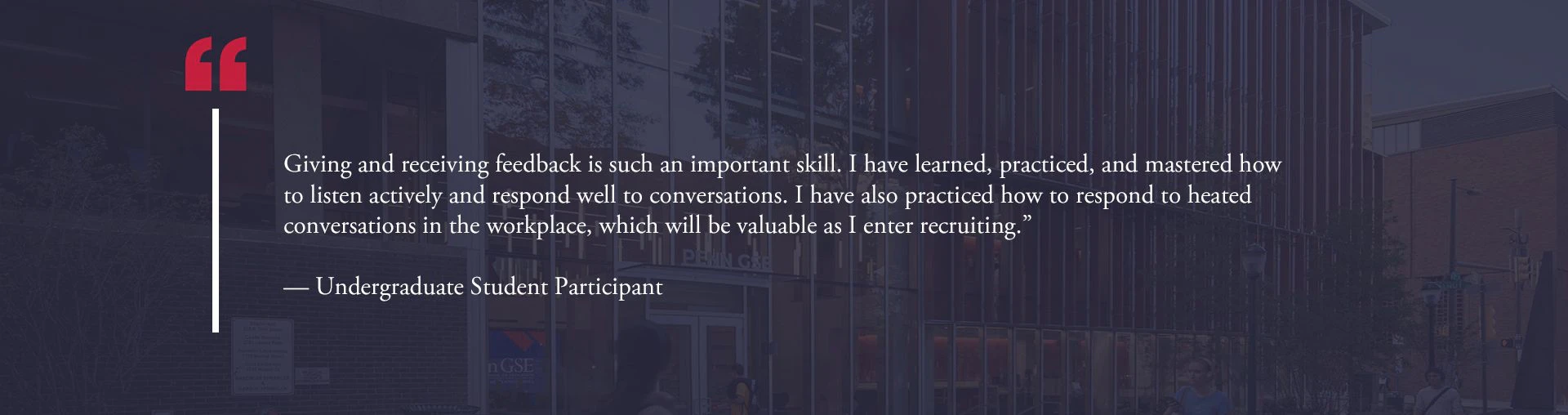
The first Productive Dialogue workshops were piloted in spring 2026 for undergraduate and MBA students. These co-curricular offerings were aligned with Professor Katherine Klein's Navigating Difficult Conversations course, also offered in spring. Insights from faculty, student surveys, and participant feedback are helping guide the design and implementation of the 2026–2027 Productive Dialogue offerings. These findings have helped identify strengths, gaps, and opportunities across Wharton’s current instructional landscape and show how topics related to productive dialogue are addressed both directly and indirectly.
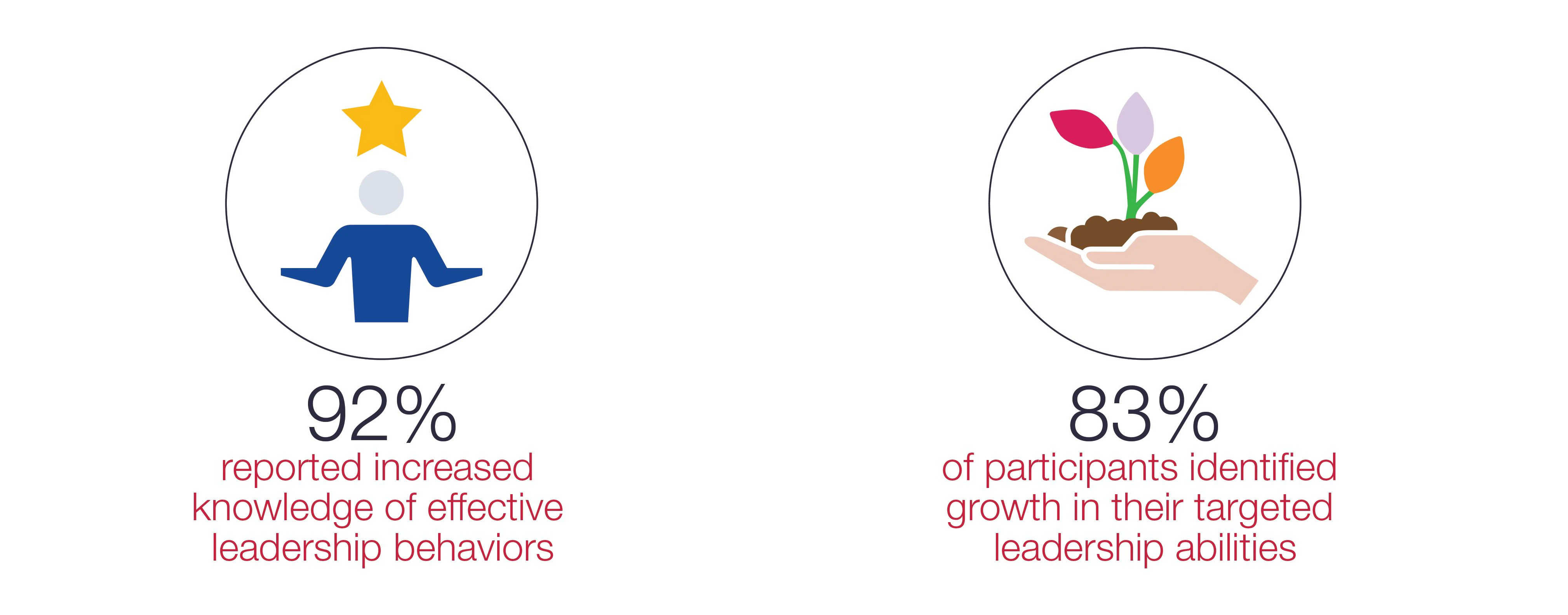
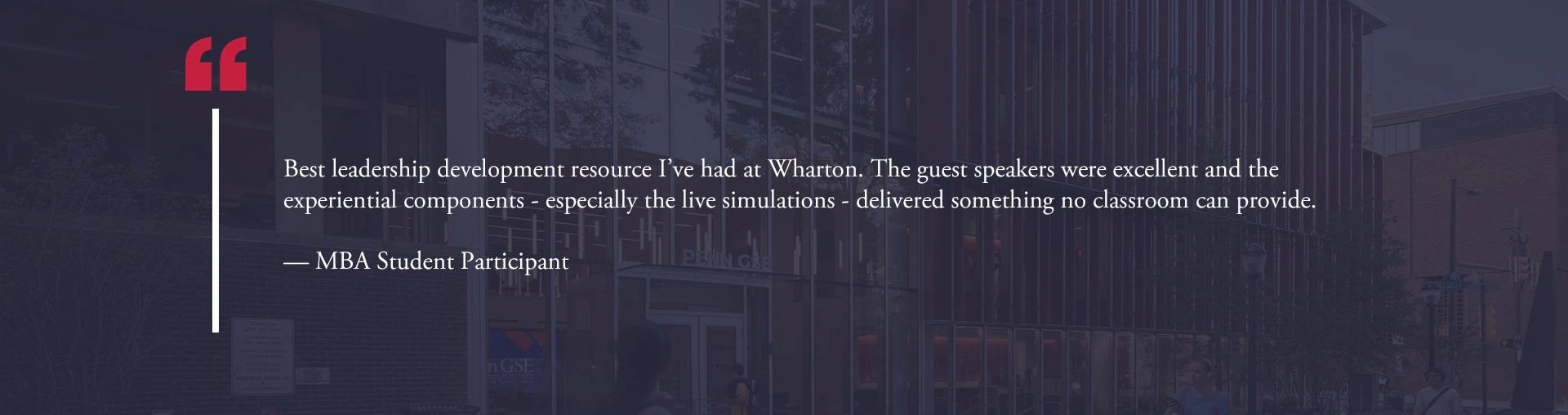
These findings have helped identify existing strengths, gaps, and opportunities across Wharton’s current instructional landscape and reveal how topics related to productive dialogue are being addressed both directly and indirectly.
Priorities for the coming academic year include strengthening undergraduate participation and expanding the scope and duration of offerings from three to six months.
We hope you enjoyed reading our Summer 2026 Leadership Report. We'd love to get your input on future newsletter content. If you have a specific MLP program you would like to hear more about, or ideas and/or suggestions for ways to improve our newsletter, we would love to hear from you.
Thank you for your support!
McNulty Leadership Program
The Wharton School
https://leadership.wharton.upenn.edu/
whartonlp@wharton.upenn.edu
